
How Much Weight Can a Flatbed Trailer Carry?
Planning is the key to effectively transporting your cargo. A vast number of rules and regulations regulate the trucking industry.
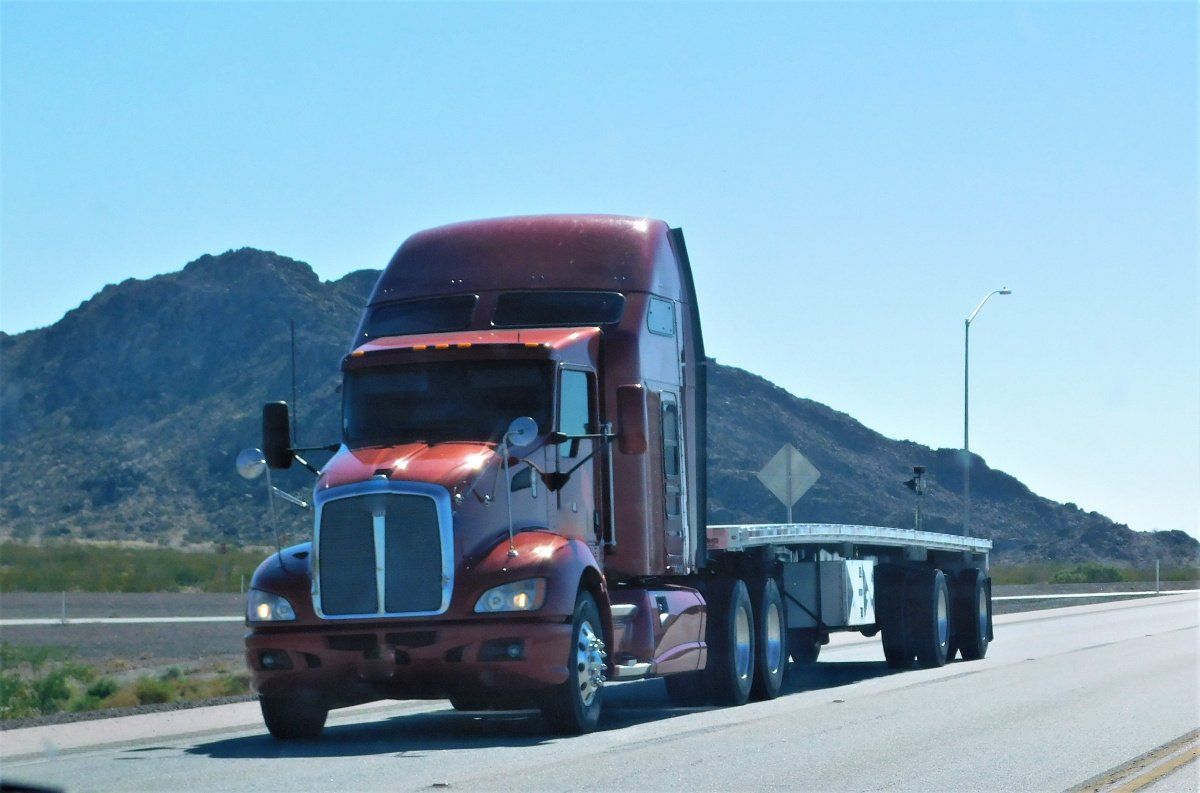
With so many regulations to obey and so much variation between states, counties, and municipalities, it may be tough for those in your position to keep track of everything.
One example is How Much Weight Can a Flatbed Trailer Carry?
What is the Maximum Weight a Flatbed Can Carry?
All commercial motor vehicles have a maximum gross vehicle weight of 80,000 pounds. This figure covers the combined weight of the semi-truck, trailer, and cargo. Flatbed trailers, in particular (which are commonly a five-axle combination), may legally carry a maximum load weight of 46,000-48,000 pounds.
Because neither a spread axle nor a closed tandem flatbed can lift this weight alone, the 46,000-48,000 pounds must be distributed along the length of the trailer.
This 80,000 pounds of gross vehicle weight must be spread between the five total axles of a flatbed tractor/trailer (1 steer, 2 drive, 2 trailers) as follows:
● Steer axle (located at the front of the tractor): 12,000 pounds
● Drive axles (located at the rear of the tractor, attached to the trailer via the fifth wheel): 34,000 pounds total — 17,000 each.
● Trailer axles: 34,000 pounds.
To be safe, these are limits you should stick to. And, unless otherwise specified, most tandem-axle flatbed trailers can only carry 48,000 (distributed) pounds.
Note: The total amount of loaded weight that your flatbed's axles can transport may vary depending on their arrangement and the state(s) through which you're driving.
Let's take a look at types of flatbed trailers and how much load they can carry.
What is a Closed-Tandem Flatbed?
According to the Department of Transportation, a closed-tandem flatbed is a flatbed trailer with axles spaced between 40 and 96 inches apart (DOT).
These are the most popular forms of flatbed trailers and are used to transport most open-deck cargoes, providing the commodities can be distributed evenly.
How Much Weight Can a Closed-Tandem Flatbed Carry?
Federal regulations limit the weight that a closed tandem flatbed (or another tandem grouping) may transport to 34,000 pounds.
When Can You Use Closed-Tandem Flatbeds?
Closed-tandem flatbed trailers are used in all parts of the United States and Canada. As a result, using these trailers is a sure bet for all legal flatbed transports.
You won't have to worry about state-by-state limits on your legal flatbed loads as long as your commodity can be distributed along the 48-53 feet of your flatbed trailer.
What is a Spread-Axle Flatbed?
Spread-axle flatbed trailers feature a greater space between their two axles. Spread axles are often spaced 10 feet apart – a significant distance greater than closed-tandem axle trailers, which are typically spaced no more than five feet apart.
How Much Weight Can a Spread-Axle Flatbed Carry?
Because of the extra space between its axles, spread-axle trailers may carry more weight than their closed-tandem alternatives. Spread-axle flatbeds may handle up to 40,000 pounds of loaded freight weight, depending on the brand and type of your individual trailer.
When Can You Use Spread-Axle Flatbeds?
Spread-axle trailers, unlike closed tandems, cannot be used in all conditions. Although capable of transporting concentrated weights of up to 40,000 pounds, 53-foot spread-axle flatbed trailers are not legally permitted in all states.
Conclusion
While you may allow for weight when your shipments reach 80,000 pounds gross, the trailer type utilized to transport these goods will need to alter as your loaded weight increases - five axles will only carry you so far.
With 48 and 53-foot flatbed trailers, you can transfer 46,000-48,000 pounds. The usage of grouped or spread axles is determined by the commodity (can it be distributed or will it be 40,000 pounds of concentrated weight?) and route.
If the weight of your loaded goods reaches 55,000 pounds, the trailer type (and the number of axles) required to transport it must be changed.
Share Content.